
Safe, Smooth, Non-Absorbent, Durable, & Easily Cleanable

Foodservice equipment must be in good repair and safe, smooth, non-absorbent, durable, and easily cleanable. Multiuse equipment is subject to deterioration because it is used over an extended period of time. Deterioration of the surfaces of equipment such as pitting may inhibit adequate cleaning of the surfaces of equipment, so that food prepared on or in the equipment becomes contaminated. Inability to effectively wash, rinse, and sanitize the surfaces of food equipment may lead to the buildup of organisms that can cause foodborne illness.
Worn cutting boards with deep, hard-to-clean scratches or gouges should be replaced, particularly if they are plastic, as these grooves harbor bacteria. Wooden cutting boards can often be restored by sanding down the damaged surface, cleaning with salt and lemon, and applying food-grade mineral oil. Badly stained or worn cutting boards with deep scratches or gouges should be replaced or resurfaced.

Surfaces that can’t be routinely cleaned and sanitized because of the materials used could harbor foodborne pathogens. For example, wooden wicker baskets can’t be easily cleaned. The many nooks and crannies in the wicker weave trap food particles that can’t be easily removed. Over time these food particles can grow harmful bacteria or mold.

Similarly, the rough and porous surface of the stone guacamole bowl pictured at the left can’t be easily cleaned or sanitized. Bowls like these should be replaced with bowls with a smooth and easily cleanable surface. Ceramic tableware bowls would be a good option for replacing these stone bowls.

Materials used in foodservice areas should be non-absorbent and durable. In the picture at the right, particle board has been used to construct the shelving in this dry storage area. Unfortunately, particle board absorbs liquids and swells when wet. It can’t be easily cleaned and is not durable in a kitchen environment. A better choice would have been stainless steel shelving or vinyl-coated or epoxy-coated wire racks.

Ceramic or china tableware with chips or cracks should be discarded and replaced. The areas where the surface glaze is broken are porous and rough, making it difficult to effectively clean these items. Dishwashers and cooks should be trained to spot chipped and cracked tableware and remove it from service.

Certain materials allow harmful chemicals to be transferred to the food being prepared. This could lead to foodborne illness. Galvanized metal (iron or steel coated with zinc) may not be used in contact with acidic foods. The acid in the food can leach the zinc from the pot or utensil. Zinc is toxic when ingested in large quantities. It can cause nausea, vomiting, lethargy, fatigue, and stomach pain. In the illustration to the right, chili, an acidic food because of the tomatoes it contains, is being prepared in a galvanized metal pot. This would be a violation of the Food Code.

Similarly, copper and copper alloys such as brass may not be used in contact with acidic food products such as fruit juice, wine, or foods containing vinegar. High concentrations of copper are poisonous. Acidic foods or beverages can leach the copper from the container. In the illustration at the left, sangria (a wine and fruit juice mixture) is being served in a grass and copper decanter. This would be a violation of the Food Code.

Ceramic, china, and crystal plates, saucers, bowls, cups, and mugs should be lead-free. Lead poisoning is particularly harmful to children and has caused learning disabilities and medical problems for those who have consumed high levels of lead. Particular attention should be paid to imported decorative hand-painted items. Decorative, hand painted ceramicware, like the plate illustrated at the right, must be permanently labeled that it is not safe for use with foods if it contains more than a very small (1-3 mg/l) of lead.
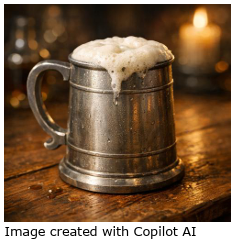
Pewter, a metal alloy containing varying amounts of tin, copper, antimony, and sometimes lead, may not be used in contact with food if it contains more than 0.05% lead.

Wood may not be used as a food-contact surface except that hard maple or an equivalently hard, close-grained wood may be used for:
Cutting boards
Cutting blocks
Bakers’ tables
Rolling pins
Chopsticks
Salad bowls
Wooden paddles used in confectionary operations American beech, yellow birch, teak, and acacia are woods with equivalent qualities to hard maple. The wooden utensil illustrated below has deteriorated and split with use over time due to frequent exposure to moisture and heat. As a result, the utensil can’t be adequately cleaned and sanitized and wood splinters may be accidently introduced into the food.

Wooden utensils do not hold up well in use in the high heat and moisture environment of a restaurant kitchen

Sponges may not be used in contact with food-contact surfaces because they are difficult, if not impossible, to clean. Because of their construction, sponges provide harborage for microorganisms, many of which may be capable of causing foodborne illness. Often kitchen equipment or utensils that were initially acceptable deteriorate with use over time. When equipment or utensils become damaged, torn, or rusted, they should be replaced.

In the illustration to the left, the oven mitts are charred and torn and have become impossible to clean adequately.

In the illustration to the right, the refrigerator shelves have become rusted to the point that they can’t be properly cleaned, and bits of rust may flake off and fall into food products. The aluminum foil covering the shelf is neither durable nor easily cleanable, and it also restricts air flow through the unit making it harder for the unit to keep foods cold.


Comments